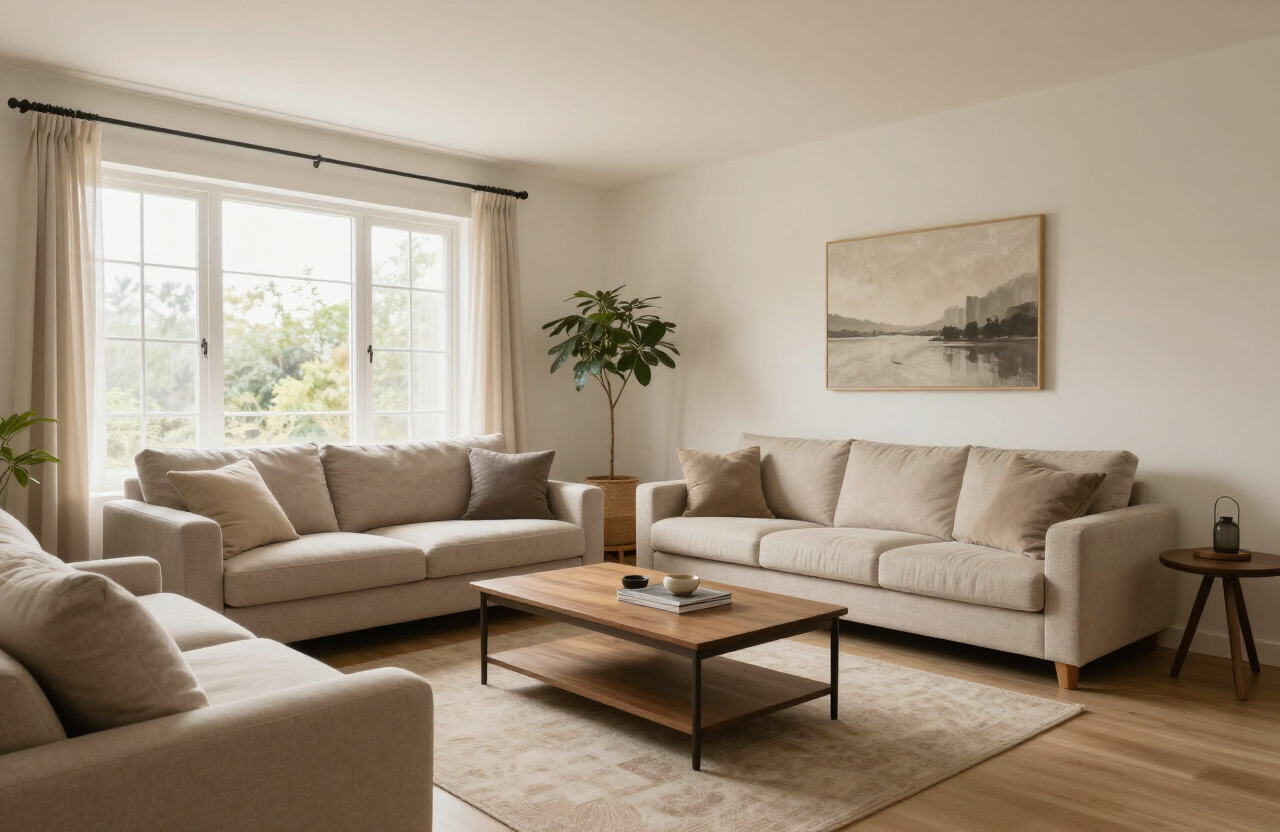
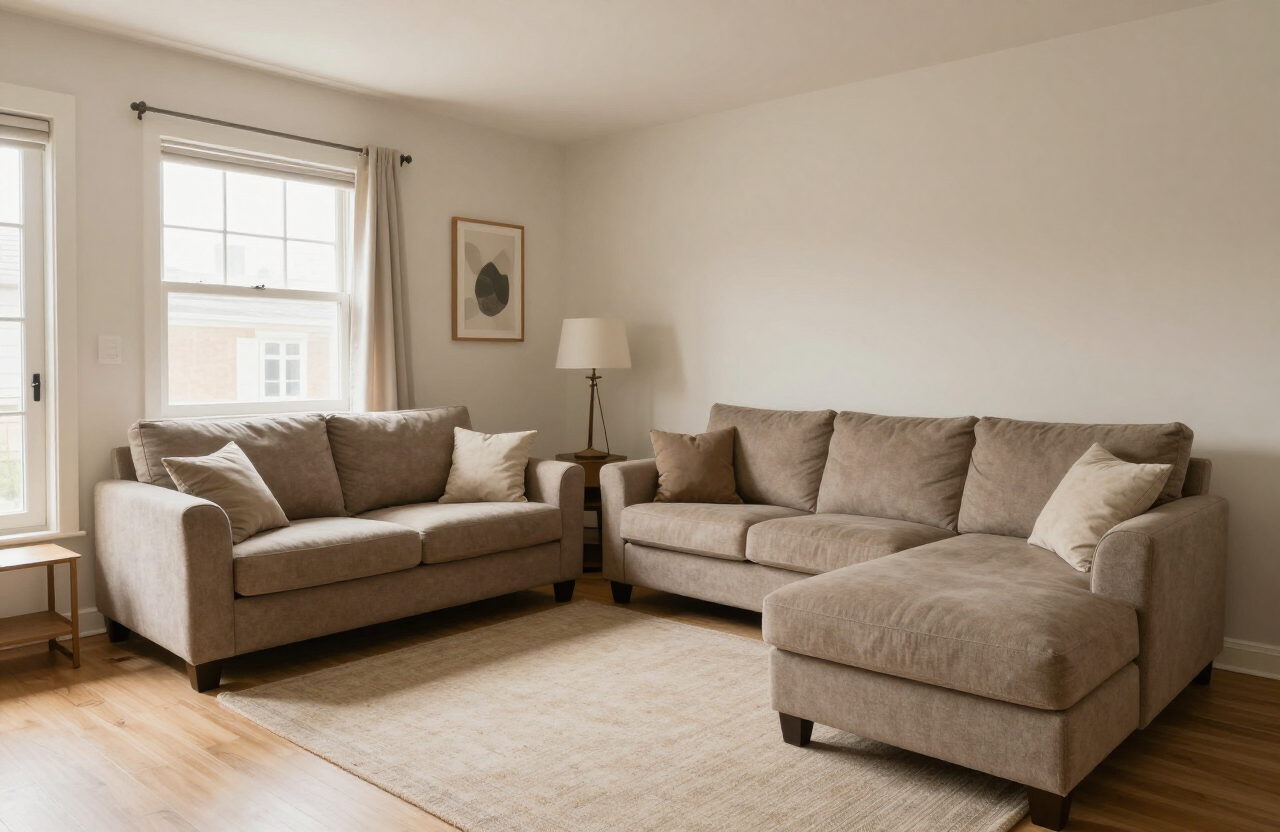
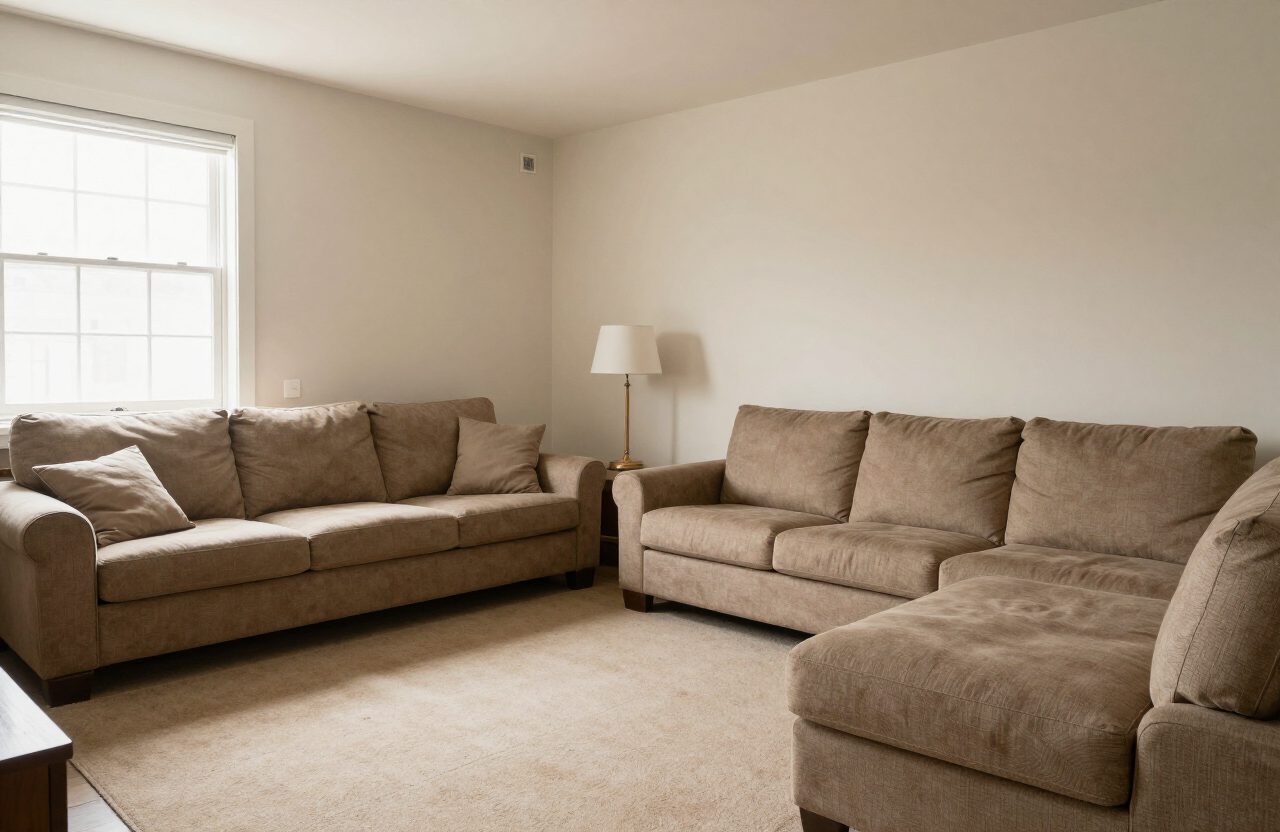
Living room
Mood Boards for Living Rooms: How to Design a Space You Actually Want to Live In
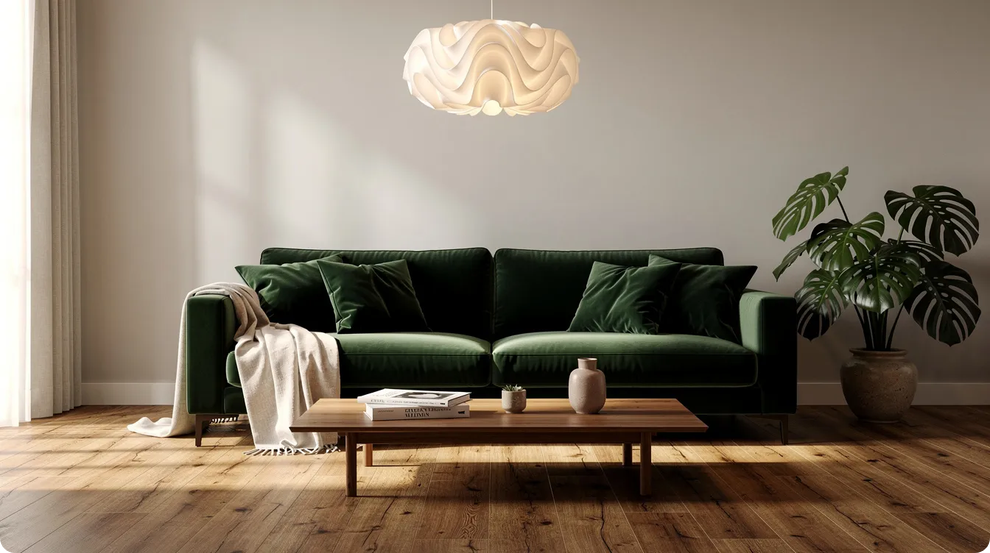
Your living room should feel like yours, not like a screenshot from someone else's feed. But getting from "I know what I like" to a room that actually reflects it is where most people stall. A mood board bridges that gap. It lets you see the whole design direction, colours, furniture, lighting, and textures, on one canvas before a single purchase is made. This article walks you through building one that works, whether you do it manually or let AI handle the heavy lifting.
TL;DR
- A living room mood board is a visual plan, images, colours, materials, and furniture grouped together, that helps you see your interior design direction before you spend money on anything.
- You can build a clear vision even if you are not a "design person" by collecting photos of real sofas, rugs, paint colours, and lighting into one canvas and letting patterns emerge naturally.
- Tools like HomeMoodBoards use AI to auto-generate HDR, photograph-style mood boards tailored to your exact living room size, style preference, and budget.
- Mood boards reduce costly mistakes, wrong sofa size, off paint colour, clashing styles, by letting you test ideas visually first and iterate before committing.
- This article walks through the full process step by step: defining your living room brief, building the mood board, and turning it into a real, shoppable plan you can act on.
What Is a Living Room Mood Board (and Why It Matters in Interior Design?)
A living room mood board is a curated collage of photograph-style images, sofas, rugs, paint swatches, flooring, lighting, and decor, that captures the room's mood, colour palette, and layout direction on a single surface. Mood boards are collages of images and textures, and a typical mood board includes photos, illustrations, and text that together express how a space should feel. Atmospheric photos convey the essence of a desired space's feel far better than words alone.
For interior design, mood boards act as a low-risk test drive of your ideas. They help you visualize design ideas before implementation, letting you spot clashing colours, mismatched wood tones, or a sofa that is clearly wrong for the room, all before you open a paint can or schedule a delivery. A digital or physical mood board can enhance interior design decision-making by organizing inspiration and product ideas on one canvas, reducing the guesswork that leads to expensive returns.
Research by McDonagh and Storer found that practitioners across design disciplines value mood boards for sparking lateral thinking and clarifying design briefs, especially when communicating between designers and non-designers. You do not need the vocabulary. You just need to point at what you love.
Here is what a well-constructed living room mood board usually includes:
- Overall room photographs to set scale and layout direction
- Close-ups of fabrics and textures (linen, bouclé, velvet, wool)
- Paint chips with specific names (for example, Sherwin-Williams Alabaster SW 7008)
- Flooring samples: oak, walnut, parquet, stone, tile
- Furniture silhouettes: sofa styles, armchairs, coffee tables, media consoles
- Lighting fixtures: pendants, floor lamps, table lamps
- Accent decor: framed art, plants, ceramics, candles, cushions
How do physical and digital boards compare?
Physical boards (printed photos, fabric swatches, wood samples pinned to foam board) give you true colour accuracy and tactile texture, which is critical when touch matters. But they are hard to rearrange, duplicate, or share remotely.
Digital boards are infinitely editable, easy to duplicate, and simple to share with partners, contractors, or designers. Digital mood boards can be created using online tools like Canva, Milanote, or dedicated platforms. The trade-off is that screen colours can shift depending on your monitor's calibration.
At HomeMoodBoards, we built an AI-powered design studio that generates HDR, photograph-style living room mood boards from a simple description, something like "2026 new-build living room, Scandinavian-Japandi, €5,000 budget, must keep existing oak flooring." You enter your room details, pick a style and mood, and receive three distinct board concepts to compare. It is not a shop. It is a planning and inspiration tool that helps you lock in direction before you start ordering from retailers. You can start a living room board in the studio whenever you are ready.
Step-by-Step: How to Create a Living Room Mood Board That Actually Works
This section is a practical roadmap you can follow in a single weekend. Work through it manually using Pinterest and Canva, or let HomeMoodBoards automate large parts using AI image generation in HDR, photograph style. Either way, the sequence is the same. If you want a shorter companion, our guide on how to make a mood board for a room covers the same bones.
1. Define Your Project Brief
Before collecting a single image, write down your constraints. This is where discipline saves you from a board that looks like a random Pinterest dump.
- Room size and shape: A 15m² city apartment living room has different needs than a 35m² open-plan space. Note dimensions.
- Natural light orientation: Which way do the windows face? Natural light enhances the appeal of a living room space and dramatically affects how paint colours read.
- Existing must-stay items: That 2020 gray sectional, the walnut media unit, the original 1990s fireplace. Photograph them and add them to your board later.
- Lifestyle factors: Kids? Pets? Work-from-home desk in the corner? Flexible built-ins provide adaptable storage solutions for rooms that need to multitask.
- Budget range: Even a rough figure (€3,000 vs €10,000) changes what furniture and materials are realistic.
2. Choose a Style Direction
Pick a style label as a starting point, not a cage. Familiar labels help you search for references and filter results fast:
- Modern design features clean lines and neutral colours. See modern living room mood board ideas.
- Scandinavian style emphasizes minimalism and functionality. Start with a Scandinavian living room mood board.
- Japandi combines Japanese and Scandinavian aesthetics for simplicity. If you are curious about extending this style, see our Japandi kitchen mood board.
- Mid-century modern pairs organic curves with retro warmth.
- Bohemian style incorporates vibrant colours and eclectic decor.
- Industrial design uses raw materials like metal and wood.
- For a style that bridges old and new, explore our modern traditional interior mood board.
Save 10 to 20 reference photos per style that catches your eye. Scroll through them side by side. Whichever set makes you feel most at home is your direction.
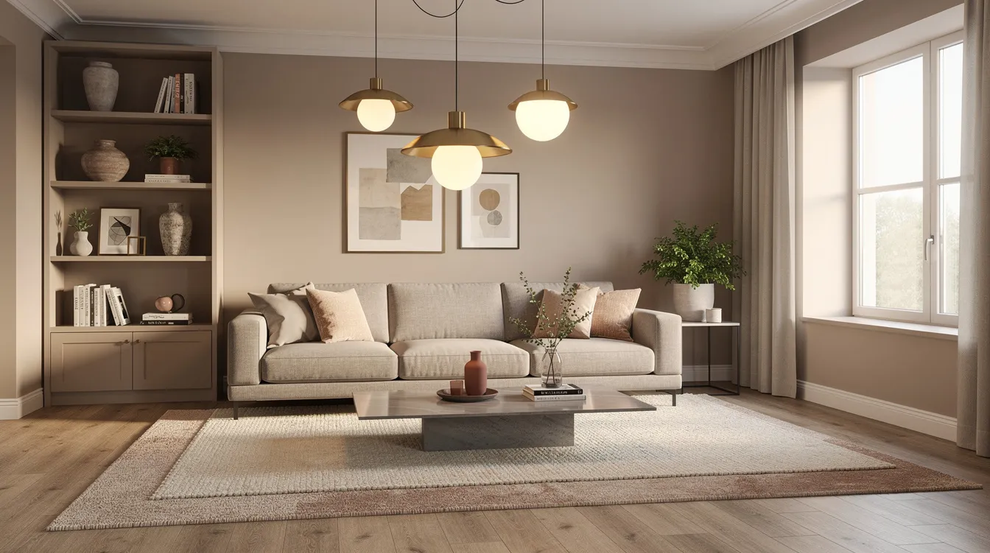
3. Gather Inspiration
Pull images from Pinterest, Instagram saves (particularly 2024 to 2026 posts), design blogs, and photographs of real homes you have visited. The key is variety within your chosen direction:
- Full-room photographs for overall spatial feel
- Furniture close-ups for shape, proportion, and finish
- Material macro shots for grain, weave, and sheen
Defining mood words, like "calm," "layered," or "warm," helps filter items for mood boards and prevents your search from spiraling. If a search result does not match your mood words, skip it. The gallery of finished boards is a useful place to compare whole-room directions side by side.
4. Choose a Colour Palette
Colour establishes the emotional energy and baseline ambiance of a room. Colour palettes help visualize the overall design before execution, and mood boards organize colour swatches and design ideas effectively. Use the widely adopted 60/30/10 framework:
- Base colour (60%): The dominant neutral covering walls and large surfaces. Neutral base colours create a warm living room atmosphere. Example: warm white or soft greige.
- Secondary colour (30%): Your secondary neutral, typically showing up in furniture and flooring. Example: light oak or warm taupe upholstery.
- Accent colours (10%): One or two punchy tones, rust, deep forest green, dusky pink, that bring life. Accent colours should make up about 10% of a room's colour palette.
Name actual paint colours and finishes. "Warm white" means nothing at the hardware store. "Benjamin Moore White Dove OC-17" does. Using real material samples in mood boards retains the true colour tone, so order free paint chips and fabric samples where possible. Our guide to an interior mood board for choosing paint colours goes deeper on that step.
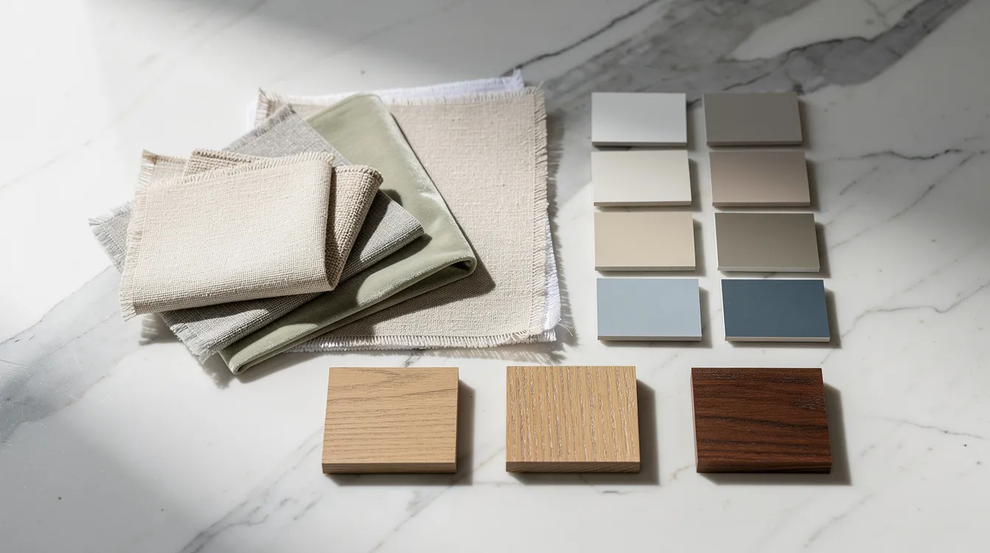
5. Select Core Furniture Visuals
Major furniture pieces define the style archetype in mood boards. The sofa alone signals whether a room reads as mid-century, modern, or traditional. When selecting furniture, prioritize comfort and functionality alongside aesthetics. If you are still narrowing the shortlist, an interior mood board for choosing furniture keeps the comparison honest.
Consider these decisions and find photograph-style images for each:
- Sofa style: low-profile vs high-back, chaise vs straight, neutral or statement fabric
- Coffee table shape: round softens a room, rectangular anchors it, oval splits the difference
- Accent chairs: a single reading chair or a pair for symmetry
- Media console and side tables: matching the wood tone from your palette
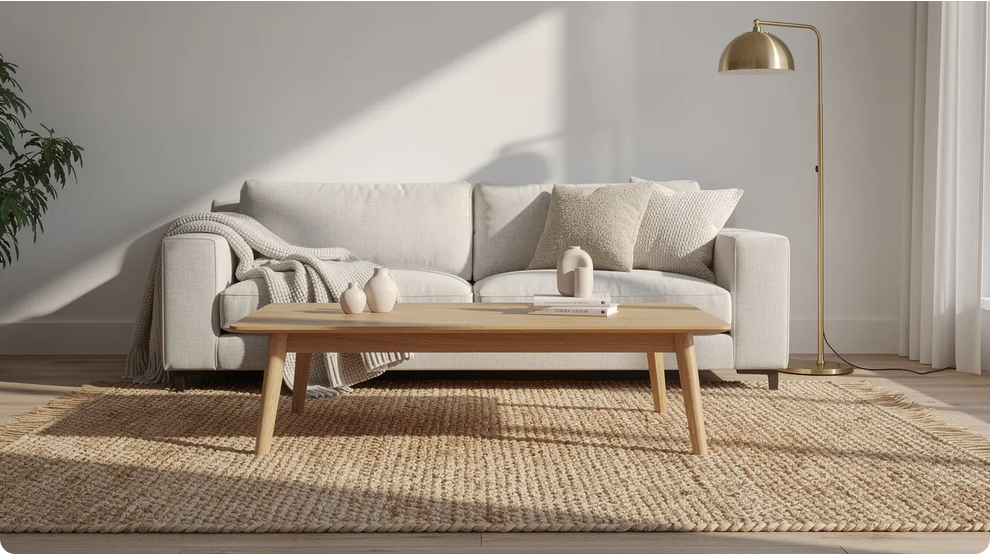
6. Layer Materials and Textures
Textures prevent a neutral room from looking flat and inject depth. Incorporating textures adds depth to room design and makes a space feel considered rather than catalog-ordered.
Build a texture mix on your board:
- Rugs: wool for softness, jute for raw warmth
- Upholstery: bouclé for visual interest, linen for casual elegance
- Wood tones: oak or walnut, ideally consistent across pieces. For guidance on pairing these, read our natural wood interior colour palette.
- Metal finishes: black, brass, or chrome. Pick two max. Subtle black accents can complement warm wood tones beautifully.
- Soft furnishings: curtains, cushions, and throws that layer over your base
Layering textures enhances the visual appeal of colour palettes and keeps even the most neutral room from feeling one-note. Warm woods and subtle black accents enhance living room design when used together intentionally. A neutral living room mood board with texture shows how far weave and grain can carry a quiet palette.
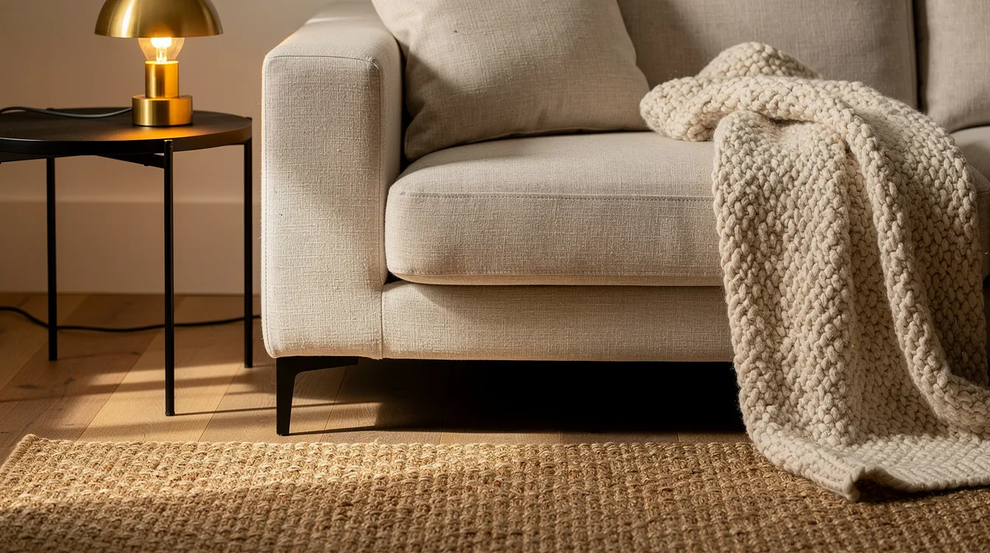
7. Choose Lighting
Lighting plays a crucial role in setting the ambiance of a room, and observing both lighting and colour schemes is important when designing a room that feels right at different times of day. Plan for at least three sources:
- Main ceiling fixture: 2026 trends point toward sculptural but simple pendants that serve as a sign of personal style, not just function
- Floor lamp near seating: provides task lighting for reading and creates warmth
- Table lamp for evening ambiance: softer, lower light that shifts the room's mood after dark
Include all three on your board to preview how the room transitions from daylight to evening.
8. Add Decor and Personality
This is the fun part. Including personal references makes a room feel collected rather than showroom-like. Current trend reports agree: personality over polish is the direction for 2026.
Add 5 to 10 decor elements that express your story:
- Framed art or photography
- Coffee-table books
- Plants, an olive tree, monstera, or trailing pothos. Plants introduce organic life into interior spaces and soften hard lines.
- Ceramics, candles, woven baskets
- Heirloom or vintage finds
Do not overcrowd the board. These things are accents, not the main event.
9. Arrange Everything on the Board
Now assemble. Collecting about 10 to 15 items on a mood board keeps the vision focused. Acanthus Design Interiors recommends this range for living room boards specifically. Fewer than 8 leaves the direction vague. More than 15 dilutes coherence.
Place your hero image (a full-room photograph that defines the emotional goal of the space) as the largest, central anchor. Mood boards should include one hero image that defines the emotional goal of the space.
- Cluster smaller images of fabrics, paint chips, and decor around it
- Keep the layout visually balanced, not symmetrical, but not cluttered either
- Leave breathing room between images so nothing competes
10. Use HomeMoodBoards to Speed This Up
If the manual route feels like too much work, this is the way HomeMoodBoards was built to help. The workflow:
- Enter your room details (size, orientation, existing pieces)
- Pick a style, say, "Modern Scandinavian living room"
- Choose a mood (calm, cozy, airy)
- Set your budget
- Receive three AI-generated HDR, photograph-style mood boards to compare in real time
Each board arrives as a cohesive concept you can refine, not a random pile of images. Create your living room mood board and compare three directions before you buy a thing. A living room AI mood board walkthrough covers what the studio asks for and what comes back.
11. Iterate Before You Commit
Swap out one sofa image for another. Test a darker rug. Change the wall colour by uploading a new paint swatch. Iteration is where mood boards save you from the "it looked different online" trap. Continue adjusting until you can look at the board and agree that it feels like your room.
The whole point is that changing a mood board image costs nothing. Changing a delivered sofa costs a lot.
A room should feel collected, not bought in one afternoon. The board is where the collecting starts.
What to lock in before you shop
| Decision | Why it matters | Where to start |
|---|---|---|
| Sofa scale | Sets traffic flow and the style read of the room | Measure the wall and the doorway first |
| 60/30/10 palette | Stops accent colours from taking over | Name real paint colours, not "warm white" |
| Wood and metal pair | Keeps finishes from fighting | One wood family, two metals at most |
| Three lights | Lets the room work from day into evening | Pendant, floor lamp, table lamp |
| 10 to 15 board items | Keeps the vision focused | One hero photo, then swatches and silhouettes |
From Mood Board to Real Living Room: Planning, Refining, and Next Steps
Once your mood board feels right, it shifts from inspiration to decision-making tool. It tells you what to buy, what to keep, and how to lay the room out. Mood boards help visualize materials before construction begins, and that is where they save real money.
Review for Consistency
Before you act on anything, audit the board:
- Are all wood tones compatible, or are there five different browns fighting each other?
- Are metal finishes limited to a deliberate pair (for example, black and brushed brass)?
- Does the colour palette look intentional or random?
- Do the textures contrast (soft vs. rough, matte vs. sheen)?
Build a Shopping List
Translate mood board items into specifics with dimensions and price estimates:
- Sofa length and depth (measured against your actual wall space)
- Rug size. An 8×10 ft rug typically works for medium living rooms. Larger spaces need larger rugs.
- Paint quantities based on room square footage
- Number and type of light fixtures
- Approximate price range per category
Test Practical Questions
Use the board to reality-check your design:
- Is there enough seating for a family of four? A well-planned living room layout encourages social interaction, so think about conversation distances.
- Will that light-coloured rug survive a dog? If not, swap it on the board before you order.
- Where does the 55 to 65 inch TV go without dominating the room?
- Is there storage for kids' toys, remotes, blankets?
Map the Layout
Place your mood board next to a rough floor plan sketch. Make sure the chosen sofa style and coffee table shape make sense for traffic flow and focal points, fireplace, TV, window view. This is not a formal floor plan. It is a sanity check.
Refine with HomeMoodBoards
Request variations on a concept: "same layout but darker sofa," "swap brass accents for black metal," or "more minimalist version of this mood board." Sharing these variations with a partner or roommate makes the decision collaborative, not one-sided. Open the mood board generator and refine until the board matches the room you actually live in.
Extend Across the Home
Use your living room mood board as the anchor for the rest of the home. Carry the core neutral palette and accent tones into the hallway, kitchen, and dining area so the whole space feels connected rather than like separate, disjointed design projects. HomeMoodBoards supports whole-home planning for exactly this reason. A whole home interior mood board is the natural next step once the living room direction is locked.
Save and Print
Save final mood boards in high resolution. If you love having a physical reference, print them at A3 or letter size and pin them to the wall as a guide while shopping or working with contractors. This way, every decision, from the exact rug at the store to the trim colour a painter asks about, has a visual answer ready.
Plan the feeling first. The furniture follows the feeling, not the other way around.
Ready to see what your living room could look like? Try HomeMoodBoards to generate your first AI-assisted living room mood board in minutes. Enter your room details, pick a style, and get three HDR, photograph-style concepts that closely resemble real rooms you could actually live in. No design degree required, just ideas you want to bring to life. Sign up and start for free.
FAQ
Do I need interior design experience to create a living room mood board?
No experience is required. Mood boards are a beginner-friendly way to experiment with ideas visually. Start by collecting 10 to 15 images you simply love, rooms, fabrics, colours, furniture, and let patterns emerge naturally. You will notice you keep gravitating toward the same tones, shapes, or materials. That is your style direction, and you did not need a degree to find it. Research shows that non-professionals actually produce more creative outcomes when working with moderate constraints like a mood board provides.
How long does it usually take to build a useful living room mood board?
Doing it manually, gathering images on Pinterest, arranging them in Canva, sourcing paint chips, can take 2 to 4 hours spread across a weekend. That is actually part of the fun: browsing, comparing, eliminating. If you would rather skip to the good part, HomeMoodBoards' AI can produce three tailored, HDR, photograph-style boards in under 10 to 15 minutes, which you can then refine at your own pace.
Can I create a mood board if I am keeping most of my existing living room furniture?
Absolutely, and this is where mood boards are especially helpful. Photograph your current key pieces (sofa, media unit, rug) in good light and add those images to the board. Then design around them: updated paint colours, new lighting, fresh decor, and a rug or cushion swap. You will be surprised how much a room changes without replacing a single major piece. A rental living room mood board uses the same keep-what-you-have logic.
What is the difference between a mood board and a floor plan?
A mood board shows how the living room should feel: colours, style, materials, ambiance. A floor plan shows where everything goes: measurements, traffic flow, furniture placement. Both work together, but mood boards typically come first to set the creative direction before you get into precise dimensions. Think of the mood board as the "why" and the floor plan as the "where."
Can HomeMoodBoards help with other rooms besides the living room?
Yes. HomeMoodBoards supports whole-home planning. You can generate AI mood boards for bedrooms, kitchens, dining rooms, and home offices, keeping a consistent interior design style and colour story throughout your house or apartment. The principles are identical: define the brief, pick the style, and let the tool do the visual work. Once you have done one room, the rest of the home follows naturally. Browse the journal for room-by-room starting points.
Turn this idea into your own mood board
Describe your space and get three concepts with palettes, materials and light direction in about a minute.
Create your mood board